
Choose what the system may see.
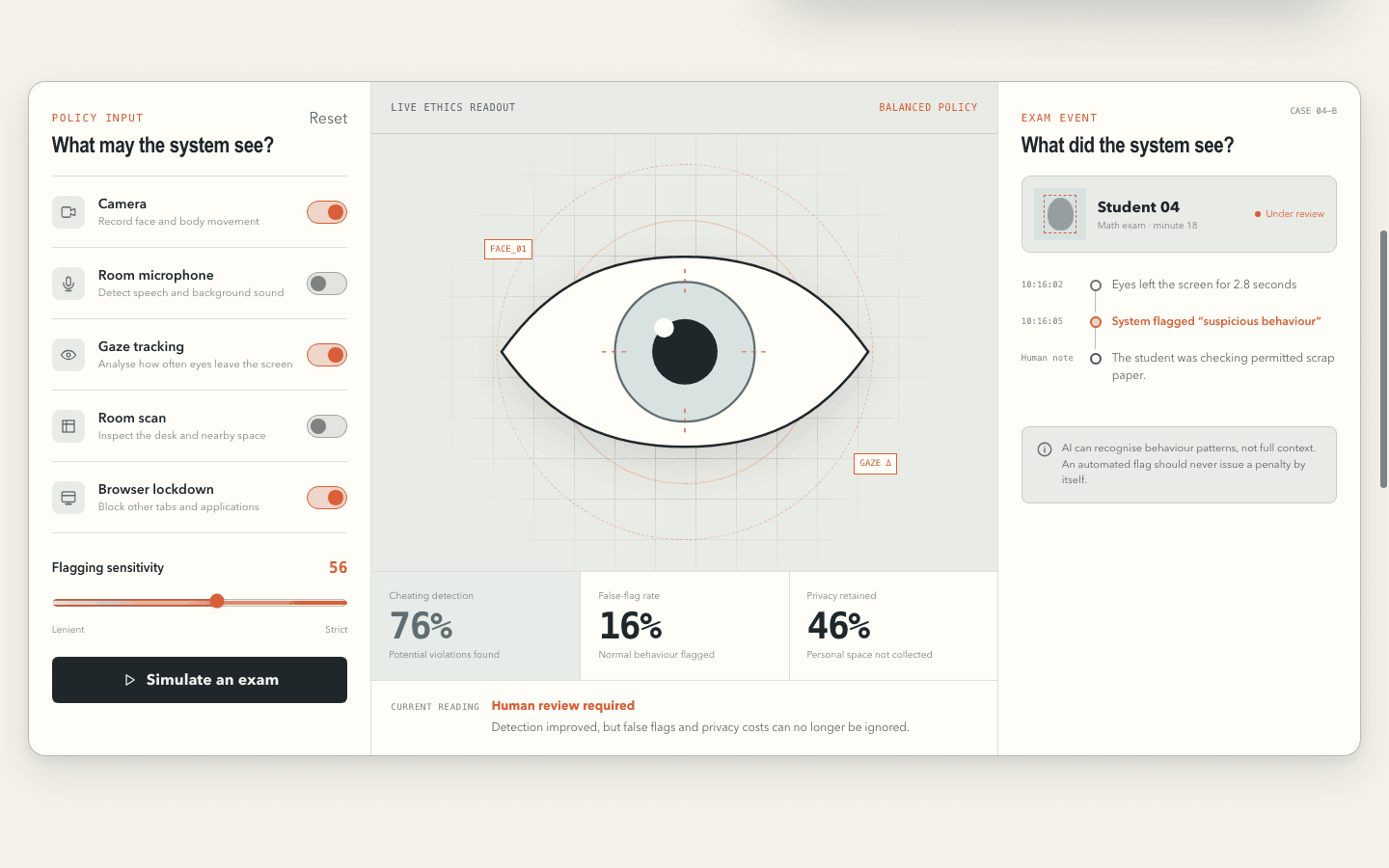
Camera, room audio, gaze tracking, room scan, browser lockdown, and flagging sensitivity create the policy input.
Interactive ethics prototype · Illustrative classroom data
An interactive experiment that makes the hidden trade-offs of AI proctoring visible: detection, false flags, privacy, and the need for human judgment move together.
Enter the live lab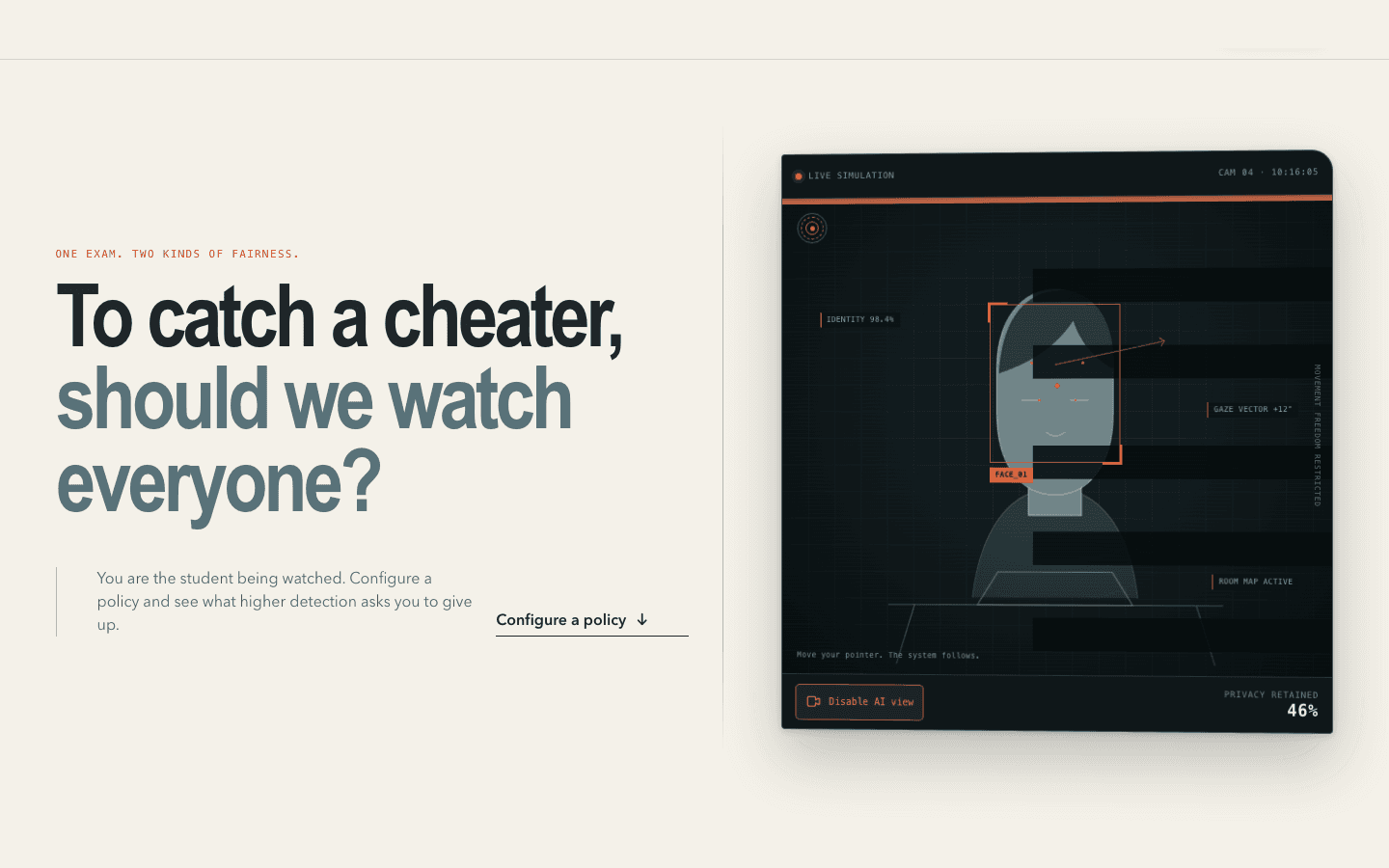
Design question
Proctoring tools are often presented as neutral accuracy systems. WATCHLINE reframes the experience around the person being watched and asks what each increase in automated detection costs in privacy, context, and procedural fairness.
The interface does not deliver a correct policy. It lets visitors configure one, observe the linked consequences, inspect an ambiguous exam event, and return the final decision to people.
Experience model
Camera, room audio, gaze tracking, room scan, browser lockdown, and flagging sensitivity create the policy input.
Detection rises alongside false flags and privacy cost, preventing a single performance number from hiding the rest of the system.
Each simulated flag resolves through human context, then asks the visitor to approve, revise, or reject the policy.
Live ethics readout
Simulated values that show the direction of each trade-off.
Interaction decisions
Student and school views change the framing without changing the underlying evidence, exposing how institutional position shapes the same policy.
Every permission and sensitivity adjustment updates detection, false flags, privacy, policy language, and the visual surveillance state together.
Ambiguous behaviour is never converted directly into punishment. The event timeline separates observation, automated flag, and human resolution.
Real interface evidence
The eye, surveillance console, and evidence timeline are not decorative dashboards. They respond to policy state and help visitors connect an abstract governance choice to a person under review.
Technical foundation
Prototype boundary
Interactive prototype
Switch perspectives, change monitoring permissions, simulate ambiguous exam events, compare policy presets, and choose your position. The complete bilingual experiment runs directly in the browser.